Every vehicle in the workshop, on one live board — from gate to handover
A franchise service workshop in Harare could tell you which vehicles were booked in and which had been invoiced, but not where any particular car stood at eleven o'clock on a Tuesday. This deployment put a live board behind the service counter showing every vehicle on site, its stage and how long it has been there — built on the cameras, job cards and phones the workshop already owned.
The operational challenge
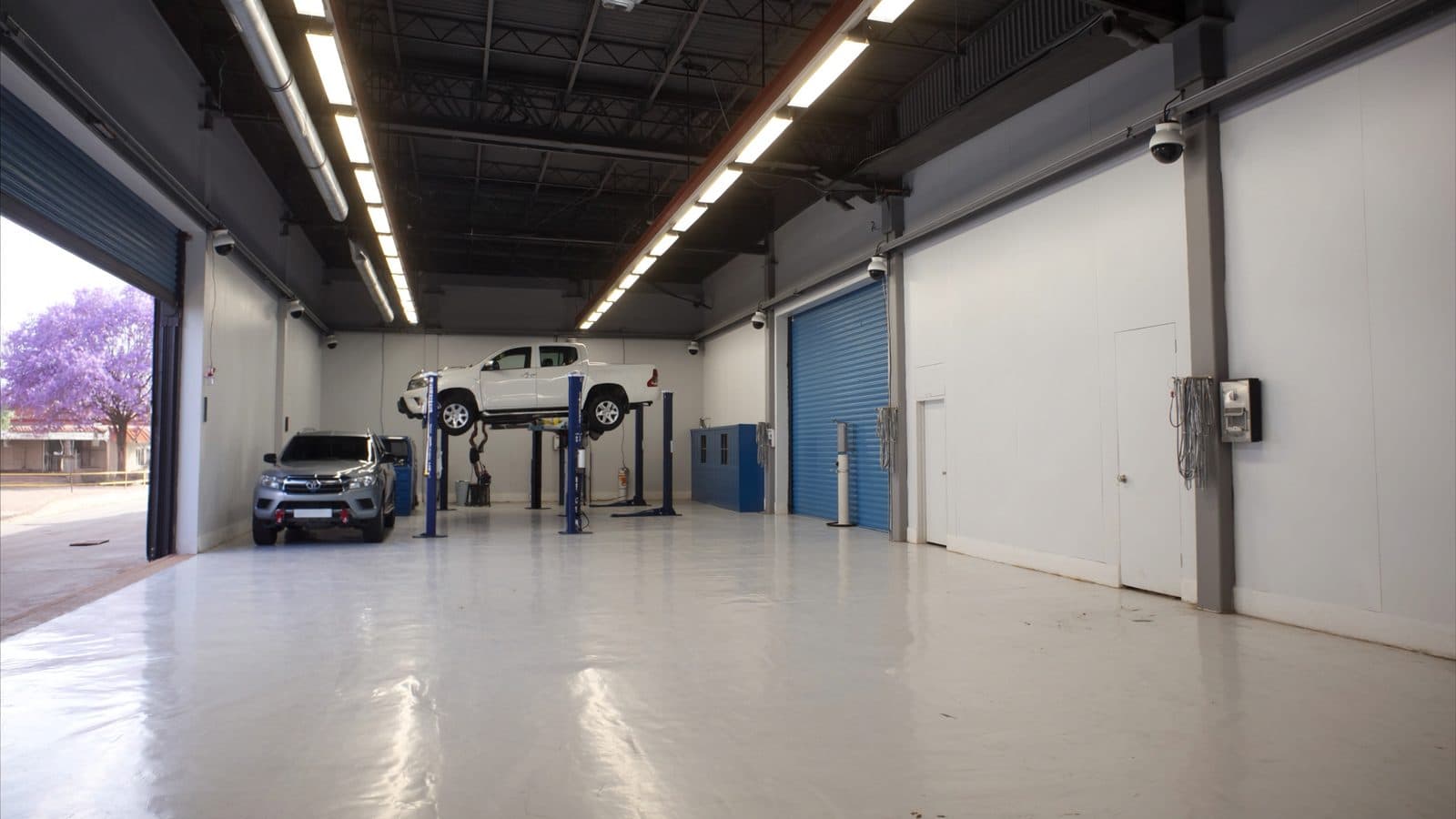
The workshop's real cost was not slow spanner work — it was searching. A vehicle arrived, moved to a bay, then the wash, then overflow parking across the road while it waited for a part, and at every move the only record was somebody's memory. Advisors spent their mornings walking the yard to answer the commonest question, whether a car would be ready today. With nothing measuring the wait, a car standing on a back-ordered part could go unnoticed for days.
What was already on the site
More than the client expected. CCTV covered the gate, the wash bay and the yard, installed for security and used for nothing else. A dealer management system held every job card, parts order and invoice, staff carried smartphones, and keys lived in a numbered cabinet at the service desk. The deployment added tags and readers — no new cameras and no software for technicians to learn.
What we built
Number plate recognition runs on the existing gate camera, recording arrival and departure the moment a vehicle crosses the line. Inside, small battery-powered BLE (Bluetooth Low Energy) beacons attach to the key tag that travels with each vehicle, and readers in the bays, wash, parts counter and parking areas register which zone that key — and therefore the car — is in. Both signals join the open job card to produce one board: registration, customer, job, stage, time in stage.
How it works day to day
A customer arrives, the plate is read, and the vehicle shows as on site before the advisor has finished greeting them. As the key moves to a bay, to parts, to the wash, the stage changes on its own and elapsed time restarts. When a vehicle sits past the agreed threshold for its stage, the foreman gets a WhatsApp message naming the registration and the stage — not a report at month end. At handover the plate is read leaving the gate and the job closes with measured durations.
Integration points
The dealer management system stays the system of record: job cards, parts and invoicing are unchanged, and tracking reads from it rather than duplicating it. Customer updates go out over WhatsApp from the workshop's own business number, so an advisor sends a status in one tap instead of working through a round of callbacks. Where a client runs InOne CRM, a closed job can trigger the service reminder on the same customer record.
What it covers
Plate read at the gate
The existing security camera becomes the arrival and departure record, so time on site is measured from the gate, not from paperwork.
Key tags, not vehicle trackers
A beacon travels on the key tag with each vehicle — far cheaper than fitting hardware to customers' cars, and it follows how keys are already handled.
Stage timing without data entry
Time in bay, waiting on parts, in wash and awaiting collection is measured as the key moves between zones. Nobody stops to log anything.
Stalled jobs raise themselves
A vehicle standing past the threshold for its stage alerts the foreman by WhatsApp while the day can still be rescued.
The foreman still runs the floor
The system reports where vehicles are, not what technicians should do. Work allocation and the response to an exception stay with people.
How it works
Site assessment
We walked the workshop from gate to handover with the service manager and foreman, mapped every place a vehicle stands, and documented the cameras, network and systems already running.
Integration and observation
Readers went into the bays, wash and parts area, plate recognition was configured on the gate camera, and job cards were connected. At first the system only watched, building a factual picture of how vehicles move.
Thresholds and escalation
Dwell thresholds per stage, and who is told when one is breached, were agreed with the foreman against that observed baseline and tested on real historical movement.
Go live and tune
The board went up behind the service counter and alerts started reaching phones. We reviewed weekly at first, tuning noisy thresholds. A first system of this kind takes approximately four to six weeks.
Questions buyers ask
Do you fit a tracker to every customer vehicle?
No. The beacon rides on the key tag, which stays with the vehicle through the workshop and returns to the cabinet at handover. Customers' cars are never modified and there is nothing to remove before collection.
How precise is the location?
Zone-level, not a coordinate on a floor plan. You know a vehicle is in the wash, at the parts counter or in overflow parking, and how long it has been there — enough for the questions a service manager actually asks, and far cheaper than precise indoor positioning.
Will this work with our dealer management system?
Usually. Where it offers an API or a readable database, we take job cards from it and write nothing back unless you ask. Where it is closed, the board runs alongside it and matches on registration number — confirmed at the site assessment, before you commit.
Are you monitoring our technicians?
Tags are on vehicle keys, not people, and the board reports vehicle stages rather than individual productivity. Staff tracking would be a separate decision with its own consultation.
What happens when the power or internet goes down?
Readers buffer locally and forward when the link returns, so an outage delays data rather than destroying it. The board shows when each zone was last heard from, instead of a clean screen that quietly stopped updating.
Book a platform briefing
Fifteen minutes on your workshop: your gate, your bays, your job card system, and where cars currently disappear. We will say what can be built on hardware you already own and what, if anything, needs adding. WhatsApp +263 77 636 6999 or sales@eigenstatesystems.com.